About Lori

Mother.
Daughter. Teacher.
Painter.
Writer.
Writer:
Lori Leachman was a professor of economics at Duke University. She taught economics at the university level for over thirty-five years. She earned her Ph.D. in economics in 1987, from the University of South Carolina. Before turning to literature, Dr. Leachman wrote for and published in a variety of academic journals. She has been in Who's Who of America's Teachers, won the 1995 Student Award for Teaching Excellence at Northern Arizona University's College of Business, and won the Howard D. Johnson Distinguished Teaching Award in 2002/3 at Duke University. In 1994 she was a summer fellow at the Center for Advanced Study in Behavioral Sciences in Palo Alto, California.
At the age of fifty, Dr. Leachman realized that her life was passing and there were a number of things outside of academics that she wanted to pursue. She took a semester off, and enrolled in a painting course at a local university. That course started her on her second path of professional development, as an artist. Since that time she has exhibited and sold her work in a number of galleries and public venues. You can view a sample of her work here.
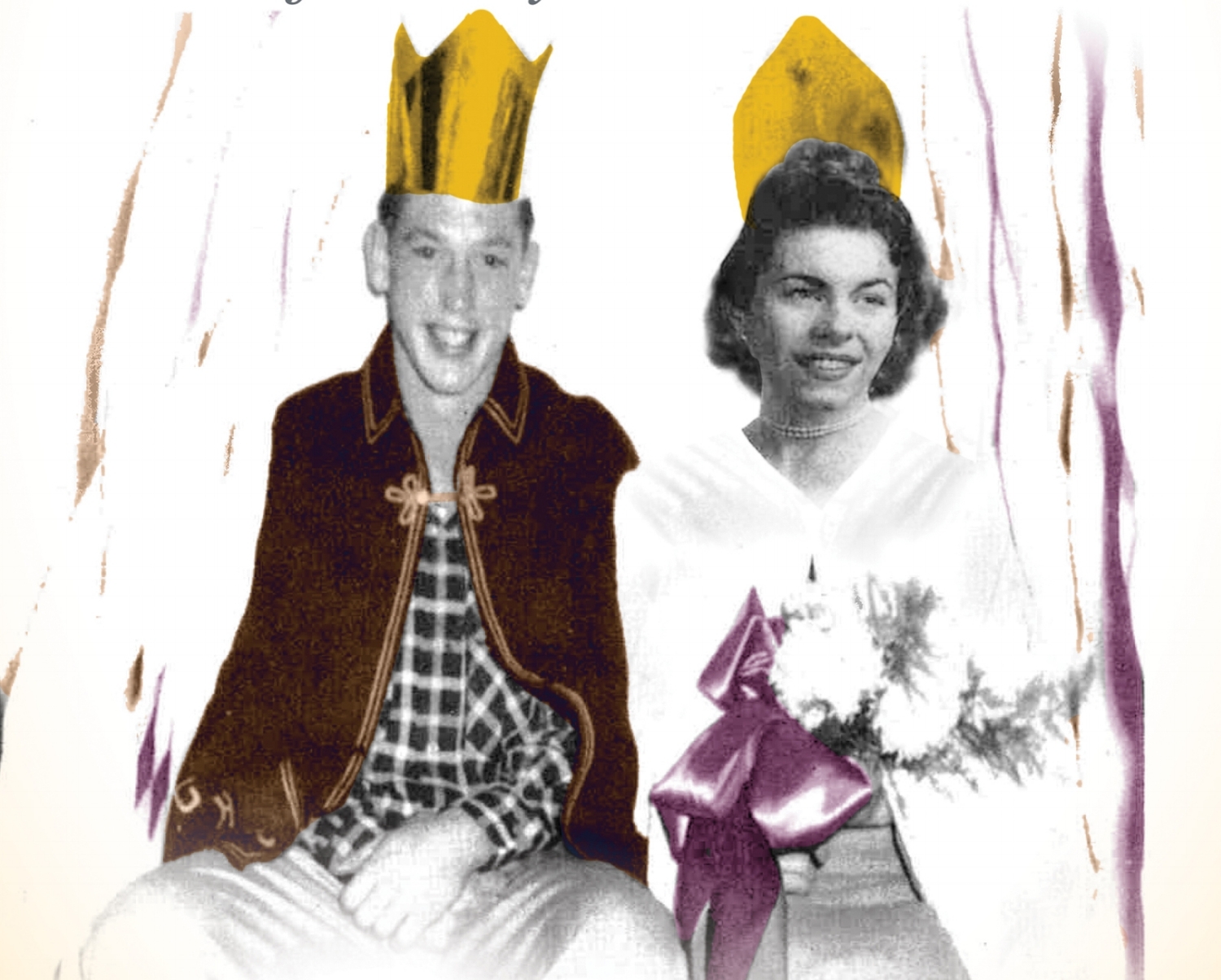
Dr. Leachman never had an aspiration to write creatively. However, in 2012 when her father died, she knew she had a story that deserved to be told. She shared that story with a number of writer friends, trying to pique their interest. They all told her that it was her story, and she needed to be the one to write it. Over the course of the next few years, Ms. Leachman let the story gestate. In 2015, while on vacation in France, she began writing vignettes. Within a few months she had the outline of the story. Over the next two years the story presented in the King of Halloween and Miss Firecracker Queen emerged.
Artist:
I have always dabbled in art. Early on I had some success working in collage and acrylic by being juried in to shows where Joyce Tenneson, Peta Coyne, and Maria Magdalena Compos Pons where the jurors. However, I did not intentionally embark on a career as an artist until I turned fifty. At that time, I realized that my life was passing and I had not gotten to a number of things on my life's To Do List. So, I took a sabbatical from my professional career as an economics professor at Duke University, and took a painting class.
The class I took was a portrait painting class with Beverly Mclver. As per her requirements, all painting was executed in oil, a medium I had always stayed away from. I realized very quickly that the lusciousness of oil was what I had always been striving for in my preceding work. And, while portraits are no longer my preferred subjects, the drawing and precision required for portrait painting provided an excellent training and discipline. Shortly after completing the class, I gave myself the task of painting nothing but fruits and vegetable for the next year. Two series evolved from that: "Onions Make Me Cry" and "Tangerines in Winter." Those two series lead to two local shows in the following two years.
After my fruits and vegetable year, I began to paint the western landscape. I have had a home in Arizona for thirty plus years now, and have always been turned on by the raw beauty of the place, and quality of the light. My first significant series to develop from my focus on landscapes was "Western Blooms"; a series of cacti paintings derived from what I was seeing in the Sonoran Desert and Verde Valley. A show of that work quickly followed.
As I was painting cacti, I came to realize that what appealed to me most was vibrant color and gnarly textures. The layering of the red onions had these qualities, as did the skin and flowers of the cacti. I am drawn to the wild, often off-putting beauty of things. This realization has lead me to focus on nature in general, and things found in the western outdoors more specifically. A number of series and shows have resulted from this interest; "Sonoran Sunrise/Sunset," "Up the Creek," and most recently, "Outside My Window." While working on these last two series, I began what became "The Magnificent Ladies of the Pando" series. The inspiration came from a winter walk in the Aspen forest west of Flagstaff, Arizona. I was captivated by the bark of these regal, yet fragile trees. I began to research these trees and their properties, and came across The Pando. That was it; I was hooked. I have spent the years since painting other things but I always return to the trees.